
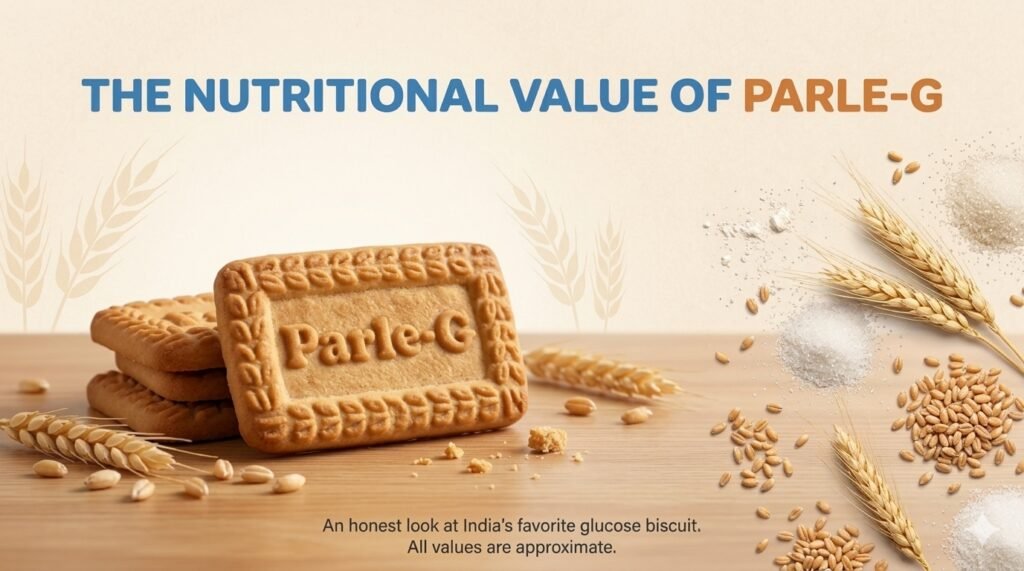
The nutritional value of Parle-G is about 454 kcal per 100 g, with 77 g of carbohydrates, 25 g of sugar, 13 g of fat and 6.8 g of protein. Here is the full breakdown, but first, a little nostalgia.
Parle-G glucose biscuits
The Nutritional Value of Parle-G
23%11% of a 2,000 kcal day
| Nutrient | Amount | % Daily Value* |
|---|---|---|
| Energy | 454 kcal227 kcal | 23%11% |
| Total Fat | 13 g6.5 g | 17%8% |
| Saturated Fat | 6 g3 g | 30%15% |
| Carbohydrates | 77.3 g38.7 g | 28%14% |
| Sugars | 25 g12.5 g | 50%25% |
| Protein | 6.8 g3.4 g | 14%7% |
| Salt | 0.7 g0.35 g | 12%6% |
Where the calories come from
- Carbohydrates 68%
- Fat 26%
- Protein 6%
*% Daily Value uses FDA reference amounts for a 2,000 kcal diet. Sugar is compared with the 50 g added sugar reference and salt is converted to sodium. Per 50 g is calculated from the per 100 g label values. Check your pack, as figures can differ slightly between markets.
Over the years, soft faces turned hard and muscular, but Parle-G stayed the same. The only change I noticed was the packaging. It used to come in an iconic white and yellow wax paper wrapper, and later moved to hard polythene packaging. The latest packet looks totally different again, with a brand new design.
According to a 2011 Nielsen report, Parle-G is the largest-selling biscuit brand in the world. It is mostly a tea time snack. Until the 1980s it was known as Parle Gluco. The G stood for Glucose, and it later became famous as G for Genius.
There are hundreds of biscuit brands in the market, but as kids, especially 90s kids, our hearts throbbed for this sweet snack. The memories are sweet, and so is the relationship. The snack became a habit.
- Parle Products was established in Vile Parle in 1929 and started making biscuits in 1939.
- The price stayed the same from 1996 to 2006.
- In 2013, Parle became India’s first domestic FMCG brand to cross 5,000 crore in retail sales.
- The most famous Parle girl isn’t real.
- Parle owns four manufacturing units in India, among its biggest.
- While you are reading this, around 4,500 people are enjoying their Parle moment.
- Around one billion packets are manufactured every month.
- Parle was the first to advertise in Mumbai local train compartments, once Indian Railways allowed it.
Is Parle-G Healthy?
While Parle-G provides quick energy, thanks to its high carbohydrate content, it is important to consider the quality of its ingredients:
1. High in Carbohydrates and Sugar
Parle-G primarily consists of refined wheat flour (maida) and sugar, making it a high-calorie snack. While this can provide a quick energy boost, excessive consumption may contribute to weight gain and blood sugar spikes.
2. Contains Fats (Including Saturated and Trans Fats)
Parle-G contains vegetable oil and some trans fats, which, if consumed in large amounts, can negatively impact heart health. However, the trans fat content is relatively low compared to deep-fried snacks.
3. Low in Fiber and Nutrients
Since Parle-G is made from refined flour, it lacks fiber, making it less beneficial for digestion. Additionally, it does not provide significant vitamins or minerals compared to whole grains.
4. Contains Added Preservatives
Like most packaged foods, Parle-G includes preservatives and artificial flavors to enhance taste and shelf life. While they are within permissible limits, natural, unprocessed snacks are always a healthier option.
Who Can Eat Parle-G?
- Children and Students: Provides quick energy, but should be eaten in moderation.
- Office-Goers: A convenient snack but should be paired with healthier options like nuts or fruits.
- Elderly Individuals: Not an ideal daily snack due to sugar and refined flour content.
- Diabetics and Health-Conscious Individuals: Should opt for healthier biscuits with whole grains and low sugar.
Healthier Alternatives to Parle-G
If you love biscuits but want healthier options, consider:
- Whole wheat or multigrain biscuits
- Oatmeal or ragi (finger millet) biscuits
- Sugar-free or low-sugar options
Should You Eat Parle-G?
Parle-G is a nostalgic, budget-friendly snack that offers quick energy, but it is not the healthiest option for daily consumption. Moderation is key—enjoy it occasionally with tea, but balance your diet with fiber-rich and protein-packed foods.
Would you still indulge in a chai and Parle-G moment, or switch to a healthier alternative? Let me know your thoughts!


Which biscuits contain fibres,is Parle G good or bad for use
Thanks for stopping by.
Well, that’s a highly debatable topic, honestly!